Output was no longer the bottleneck
Agents could produce changes quickly. The hard part was keeping enough control to know which changes should move forward.
 Book a Call
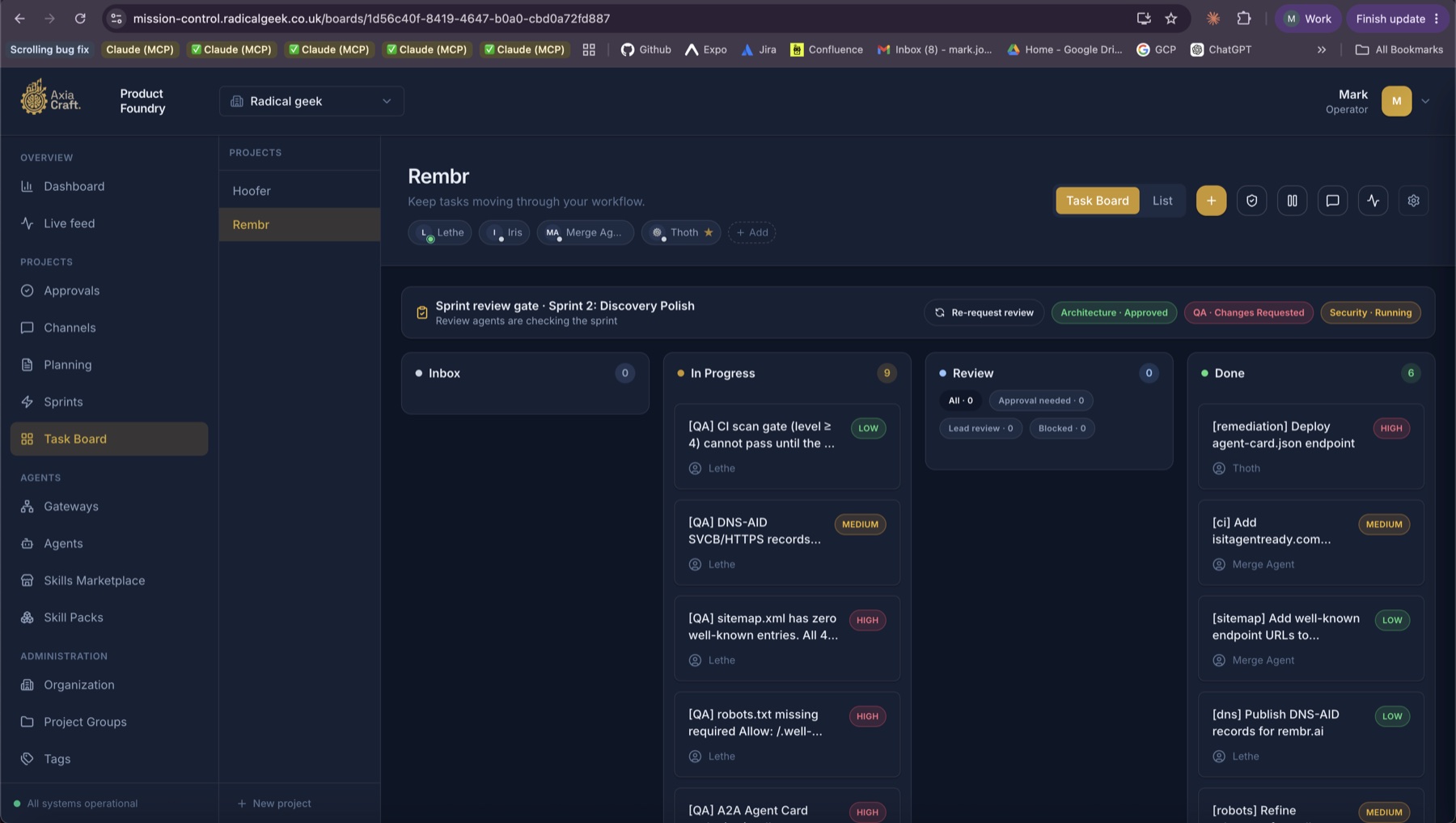
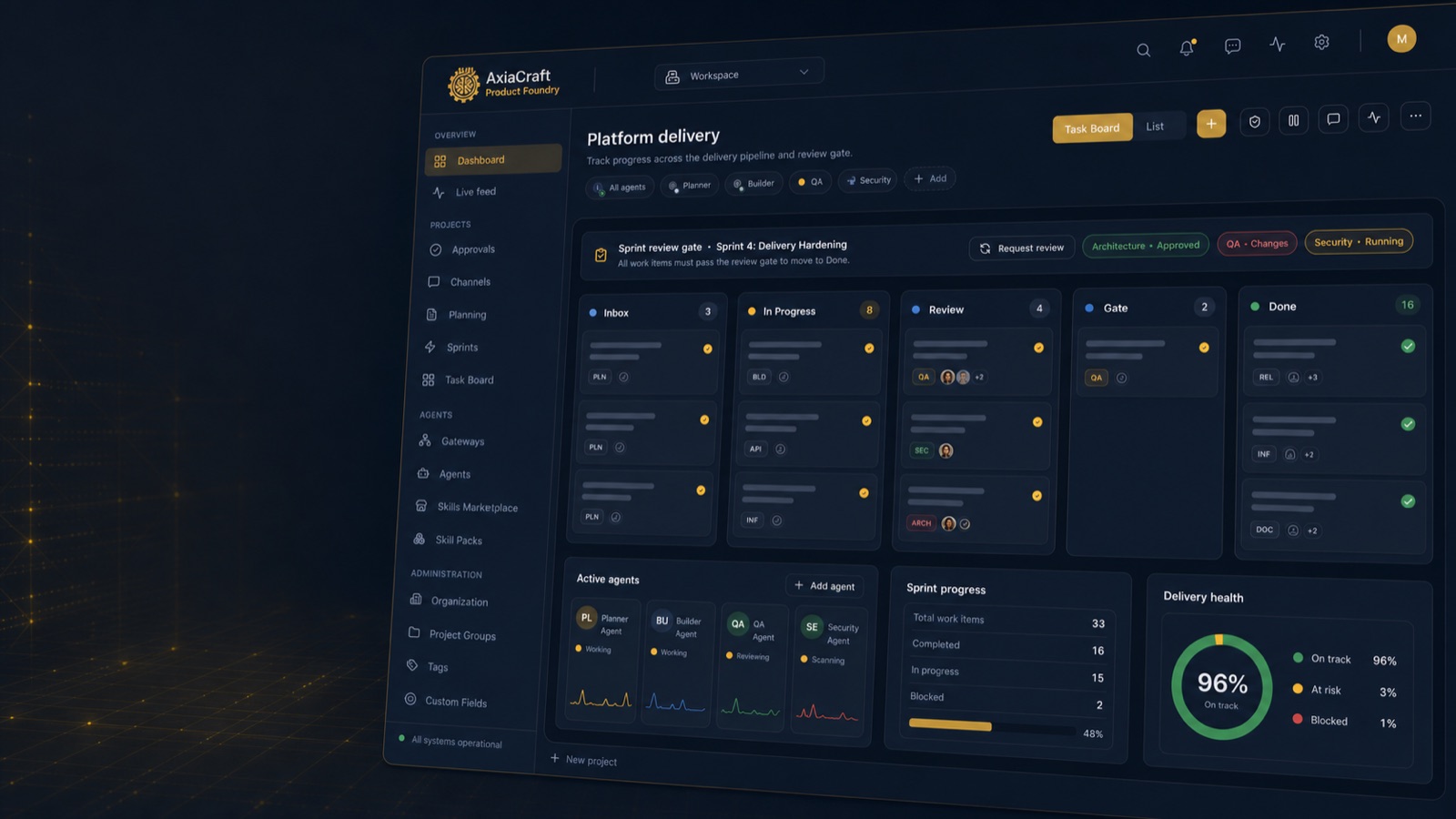
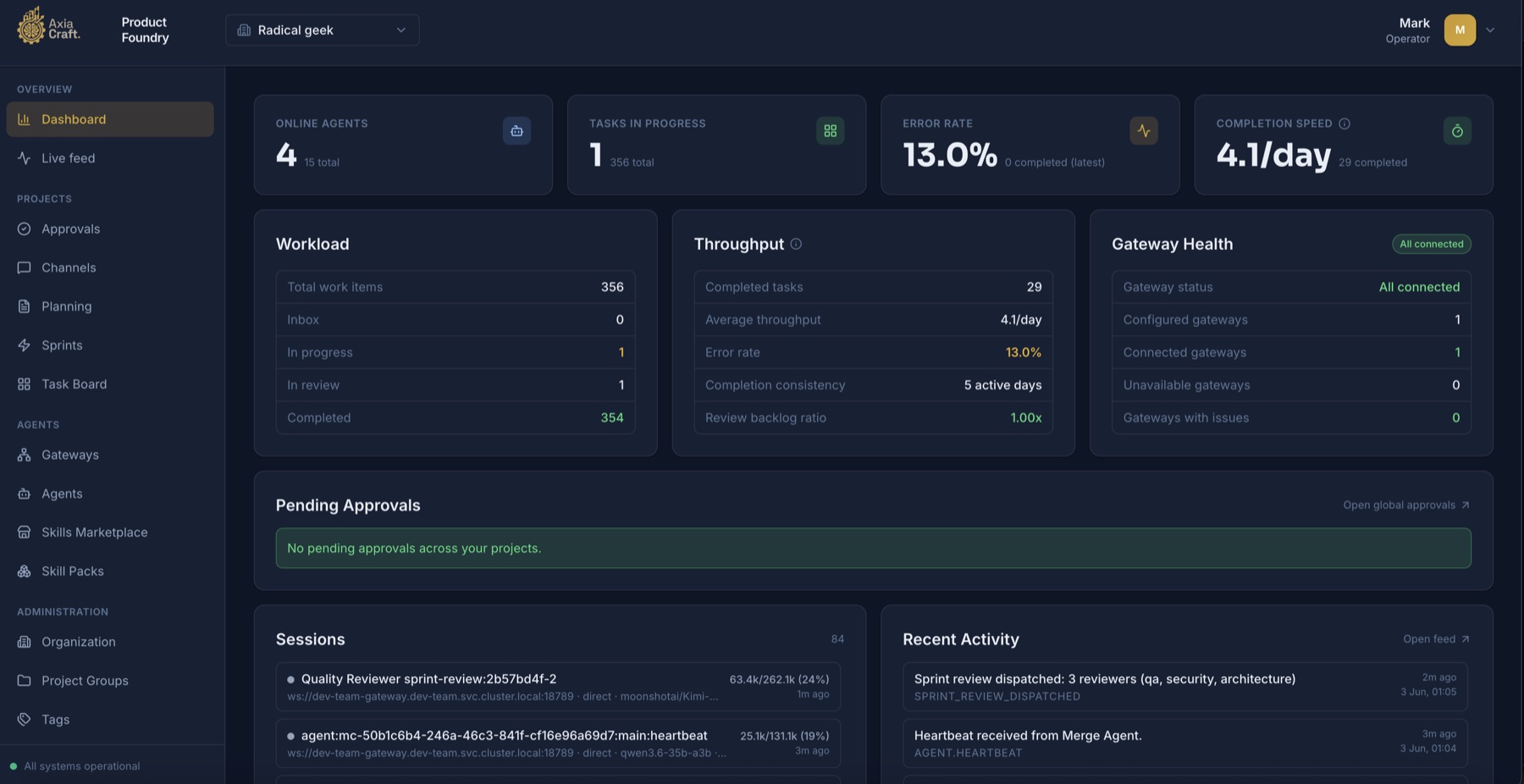
AxiaCraft is Radical Geek's work on agent-run delivery made concrete: planning, build, review, remediation, evidence capture, and deployment control working together as an inspectable system.
Why I built it
The problem was never whether an agent could write code. The problem was verifying and managing that work at scale, at machine speed.
Agents could produce changes quickly. The hard part was keeping enough control to know which changes should move forward.
Roles, permissions, tickets, workspaces, model routing, and escalation paths had to be designed into the system.
Plans, code, tests, reviews, deployment notes, and rollback routes needed to be captured as the work happened.
Retrospectives, skills, memory, metrics, and better runbooks let the system learn without losing operational discipline.
How it was built
The early AxiaCraft work was about discovering the patterns and practices that work for agent teams: teams that could receive work, break it down, make changes, test them, escalate for support, and report status back through inspectable channels.
Boards, channels, ticket lifecycles, role-scoped API tokens, support routes, and human intervention points.
OpenClaw gateways running agent teams with shared workspaces, tool access, model profiles, and isolated blast radius.
Local validation, UI checks, reviews, deployment evidence, metrics, and rollback notes before work is treated as done.
Persistent workspace files, retrospectives, skills, memory, and observability so the system improves between sprints.
OpenClaw relationship
OpenClaw is an open-source runtime and gateway layer that gives agents a place to run, use tools, work with model profiles, and operate inside controlled environments. AxiaCraft is the control plane that turns that raw capability into a governed delivery system.
Agent teams run inside gateway processes with workspaces, tools, browser access, model profiles, and runtime boundaries.
The layer above the gateways: boards, channels, provisioning, permissions, support routes, evidence capture, and operating rules.
The repeatable pattern around the work: governance, delivery flow, quality gates, metrics, training, and handover.
Repositories, CI/CD, identity, deployment targets, observability, security rules, and the constraints of real work.
The stack is modular, but the roles are clear. OpenClaw is the runtime and gateway layer; Rembr provides durable memory and context; AxiaCraft is the control plane that turns them into a production delivery factory.
What AxiaCraft became
AxiaCraft is the practical route for teams that want this capability installed around their own software estate: agent roles, runtime choices, review gates, cost controls, evidence trails, and a team that can operate it after handover.