
Radical Geek field guide
The AI Adoption Gap
A source-backed Radical Geek research paper on operational proof, delegability, evidence completeness and the operating capability required to turn AI use into durable business value.
Why this guide
AI use is spreading faster than the operating capability around it. Teams can show high weekly usage, rapid task-level gains and impressive proofs of concept while end-to-end lead time, verification workload, accountability, data readiness, delegability and value attribution remain unresolved.
This updated research paper combines current public evidence with anonymised interviews across engineering, regulated enterprise work, product delivery, education, governance and AI operations. It introduces Proof of Operation, separates consequence from delegability, examines shadow context and retrieval completeness, and extends intelligence accounting from token consumption to verified, accountable outcomes.
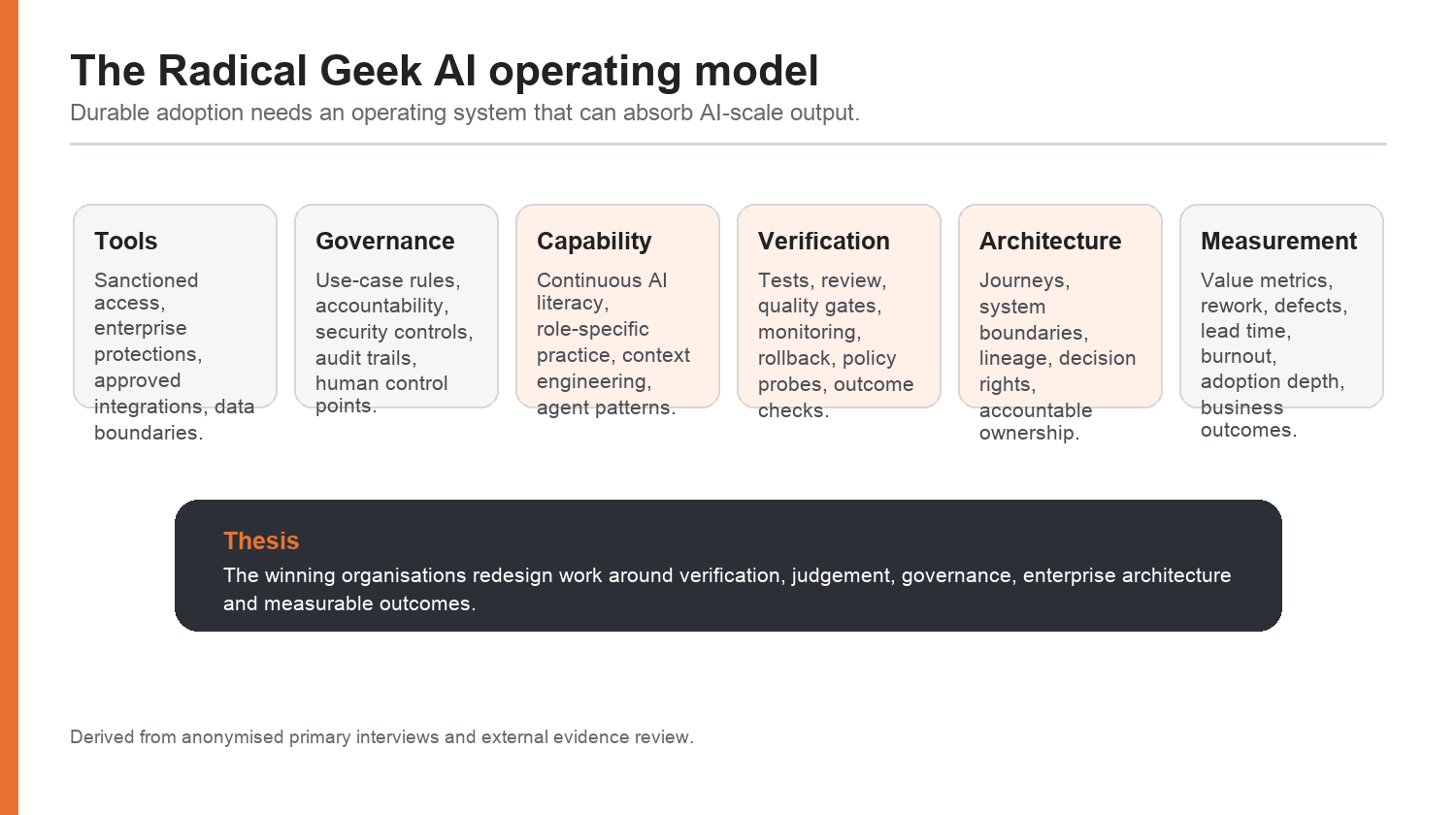
Operational adoption is earned workflow by workflow through representative exceptions, complete evidence, clear responsibility, proportionate verification and viable tail economics.
What you will leave with
A guide built to be used.
- 01
Separate widespread AI usage from dependable operational adoption.
- 02
Separate consequence-based oversight from the practical delegability of each task class.
- 03
Qualify real workflows through Proof of Operation, representative exceptions and correct abstention.
- 04
Treat agentic adoption as platform engineering and enterprise architecture.
- 05
Connect model consumption, retrieval evidence, verification effort, tail cost, risk and accountable outcomes through intelligence accounting.
Inside the guide
The working ground it covers.
- Adoption depth, delegability and Proof of Operation
- Verification capacity and the exception economy
- Agent platforms, enterprise architecture and journey ownership
- Governance, shadow context, capability formation and evidence lineage
- RAG completeness, independent verification and the trust stack
- Tail-aware AI economics, intelligence accounting and outcome measurement
- A practical operating model for leaders